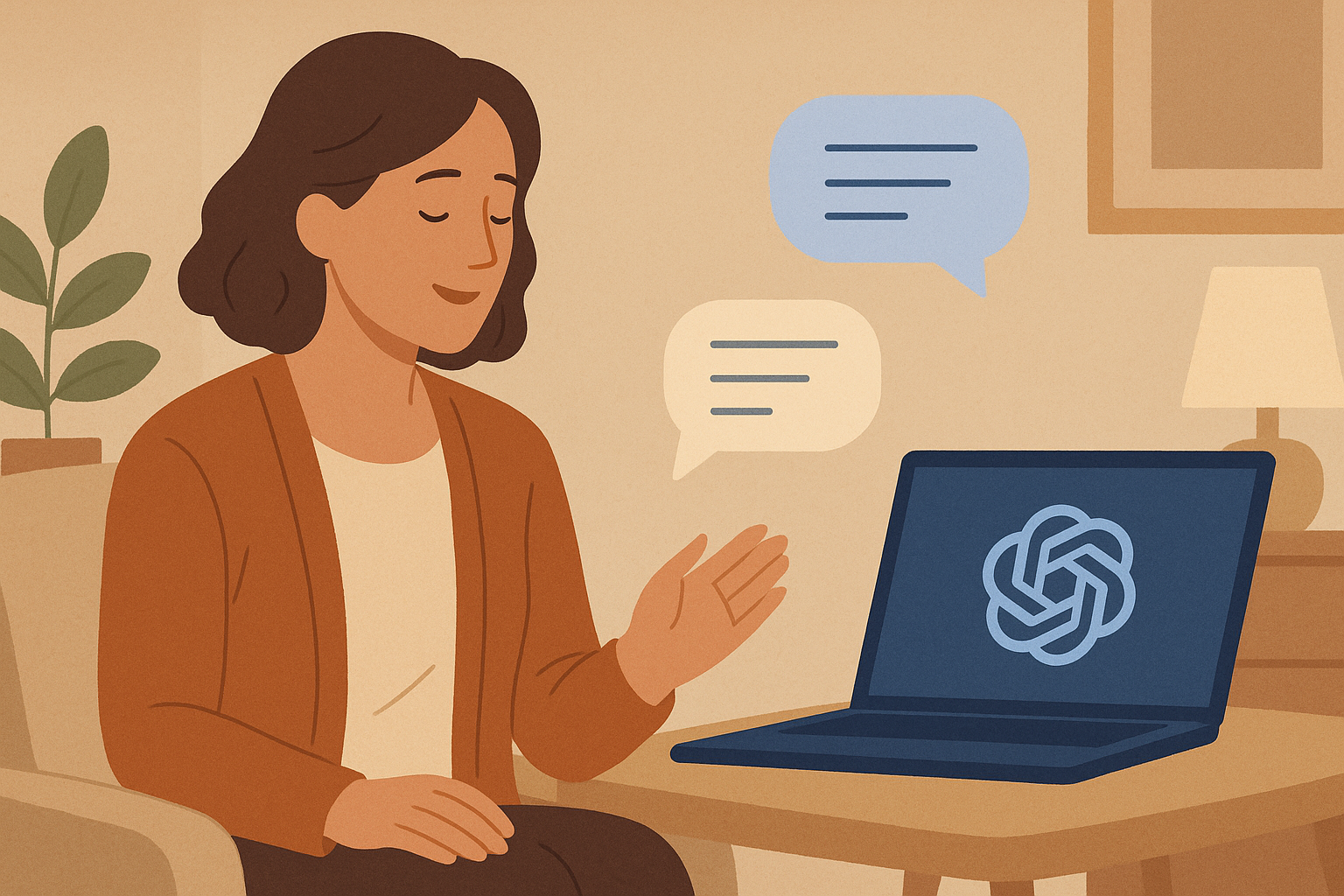
A new study featured in Forbes drew a lot of attention: ChatGPT was rated as more empathetic and helpful than human therapists — by independent experts. It sounds almost provocative. But when you look more closely at what the research actually shows, it opens up something different: an opportunity to make therapeutic work even better, with support from technology.
What did the study show?
Researchers from the University of California San Diego and others compared responses given by professional therapists and by ChatGPT-4 to patient stories taken from a large online forum. Over 1,100 responses were anonymized and evaluated by psychology professionals who didn’t know whether a human or ChatGPT had written them.
The result?
In 60% of cases, ChatGPT was rated as more empathetic, understanding, and helpful than the human therapists.
(Source: npj Digital Medicine, 2024 – as reported by Forbes)
According to the researchers, the explanation isn’t that AI is “more human,” but that the language it uses is more consistent, affirming, and structured. It doesn’t get tired. It doesn’t get unclear. It doesn’t have a bad day.
What does this mean for you as a therapist?
It doesn’t mean ChatGPT should replace you. It means you now have access to a tool that can help you become more aware, more reflective — and perhaps even more precise.
At Kipler, we use AI to support therapists, not replace them. Our tools help you with:
- Summarizing sessions and creating clear, structured notes.
- Analyzing recurring patterns and themes.
- Suggesting potential focus areas based on the content of conversations.
- Saving time — so you can spend more energy on the relationship.
We believe this creates space for better therapy. Less documentation stress. More presence.
It’s not about competing with AI — it’s about using it wisely
AI lacks something fundamental: intuition, human connection, and the professional judgment you have as a therapist. It doesn’t grasp the unspoken. It doesn’t feel what’s happening in the room.
But it can be a sparring partner. A reflective mirror. A tool that helps you notice things you might not have seen otherwise.
When used consciously and professionally, AI can strengthen your role as a therapist. It gives you time and support to focus on what matters most — being a human for another human.
In summary
The study doesn’t say that AI is a better therapist. It says we now have a tool with enormous potential. And used correctly, it can make you an even better therapist.
At Kipler, we don’t believe AI should take over.
We believe it should support you — and that’s exactly what we work on every day.