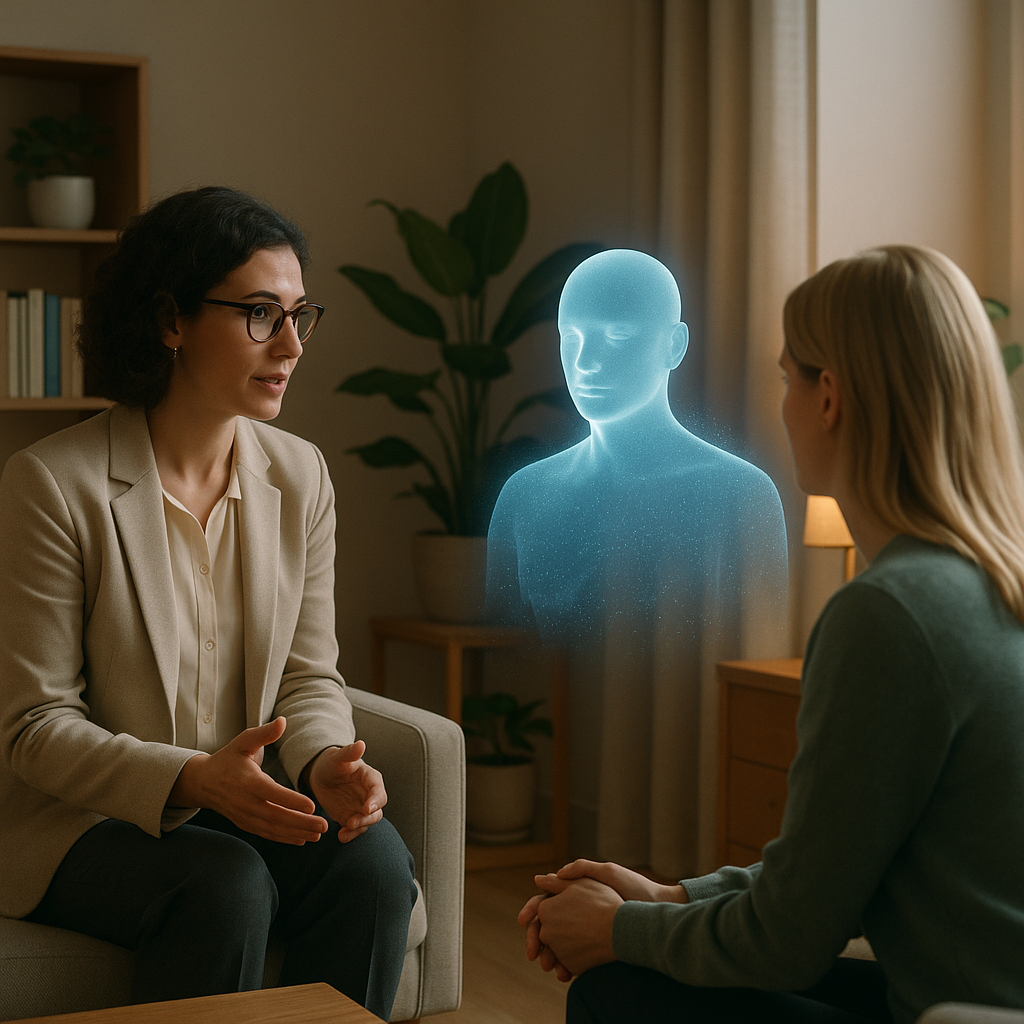
As a psychologist, you know how important it is to be fully present in the conversation — to listen attentively, pick up on nuances, and follow what the patient shares without constantly thinking about what needs to be written down, remembered, or documented afterward. This is where artificial intelligence can actually be of help.
Free up time to be present
By using AI for transcription, you no longer need to take notes during the session. The conversation is recorded and automatically transcribed, allowing you to review exactly what was said later. This creates space to listen with your full attention, without worrying about missing important details. For many, this brings a greater sense of calm — for both the psychologist and the patient.
An extra set of eyes
One of the most exciting things about AI is its ability to analyze the conversation afterward and look for patterns, themes, and changes over time. It might reveal something you didn’t catch in the moment — a recurring concern, a shift in tone, or a type of question that triggers reflection in the patient. It’s not because the therapist isn’t attentive, but because we humans have limited capacity. AI can offer a gentle nudge in the right direction — like a quiet assistant helping us see more.
Feedback that strengthens your confidence
Perhaps the most valuable aspect is the opportunity to receive concrete feedback on your own style and method. How much do you talk? How often do you ask open-ended questions? Do you let the patient finish? These are things we typically reflect on during supervision or self-evaluation, but AI can provide clear data to support that reflection. It’s not about being judged or evaluated, but about gaining insights that build confidence in your role — and perhaps open the door to further growth.
A thought to leave you with
Using AI in therapy isn’t about automating the human element. It’s about giving us, as therapists, better tools to do what we already strive to do — to be present, to understand, and to help. And maybe, with a little help from technology, we can become even better at just that.